
 ҚАЗ
ҚАЗ  RUS
RUS  ENG
ENG 
Ust-Kamenogorsk, East Kazakhstan, Nauryz 2026. In Republic Square, the beloved song “Akbulak” fills the air. Performed by 5,201 people, singing and playing the dombra, it has become a symbol of the coming of spring. The song’s author is Bakir Tazhibayev, a name known not only in Kazakhstan but far beyond its borders.
The editorial team at DimashNews spoke with the son of the legendary poet, writer, and composer, Zhasulan Tazhibayev, gathering unique stories about a man whose name has been on the lips of generations.
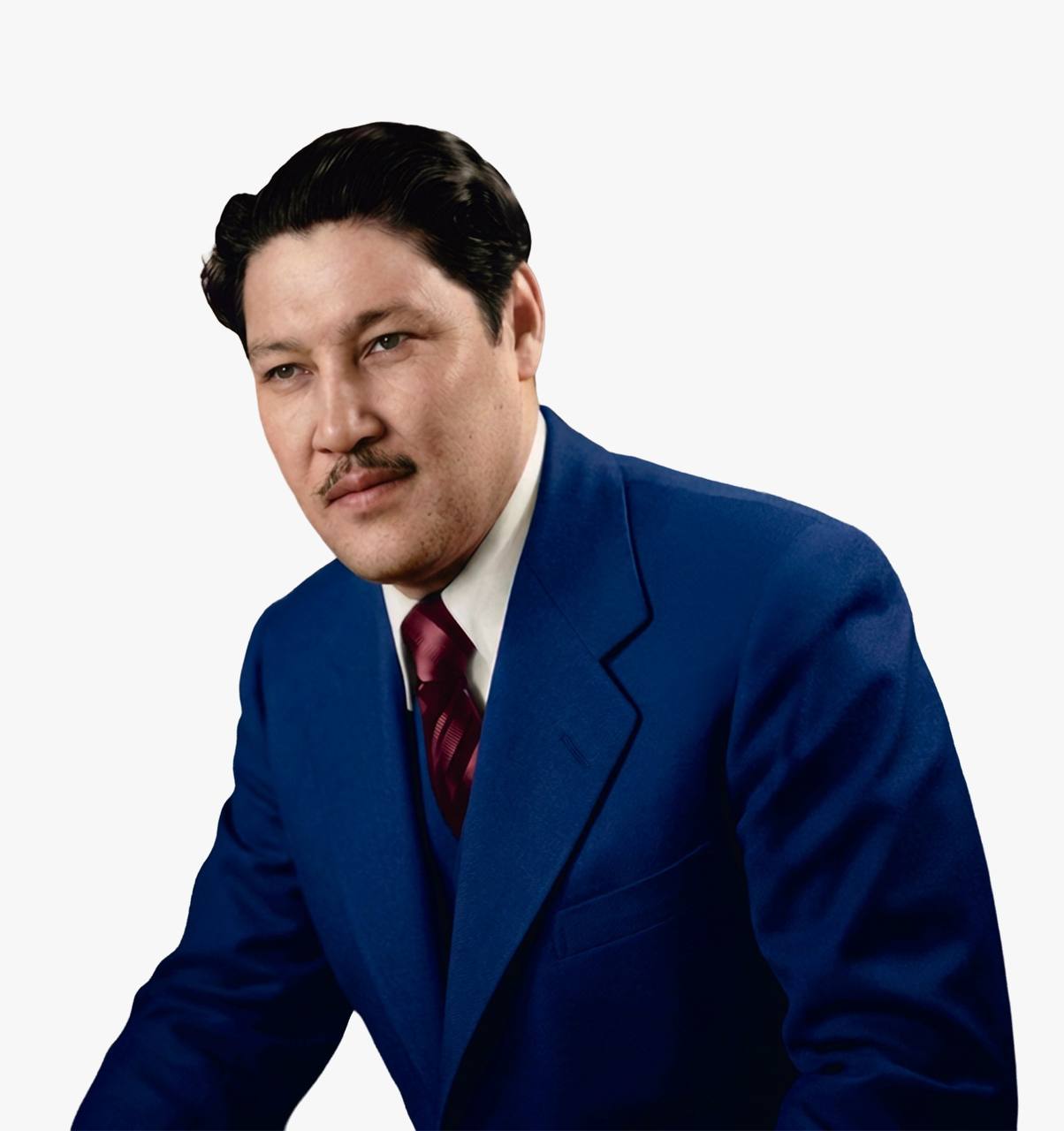
“When the whole country began singing his songs, ‘Akbulak’ was everywhere – on the radio, on television. People recognized my father on the streets and asked for autographs. That’s when I truly understood the scale of his personality.
There was a story once told by the well-known writer Kalmukhan Isabayev. In those years, writers often traveled to the regions to meet readers. One day, my father went on such a trip with a creative group.
On one of those days, they were riding in a taxi to their next meeting. ‘Akbulak’ was playing on the radio, and the driver was listening with admiration. One of my father’s friends jokingly asked what he would do if he met the song’s author, Bakir Tazhibayev. The driver replied that he would throw a grand celebration.
When he learned that the author himself was in the car, the driver stopped, persuaded everyone to go to his village, and organized a real feast. They say that day several village elders even skipped their prayers at the mosque for the occasion. All night long, my father and his friends sang songs and recited poetry for the gathered villagers.
Speaking about the dombra players’ performance that entered the Guinness Book of Records… for me personally, the choice of this song means a great deal. It means the song is alive and will continue to live, since so many people came together to perform it. I’m deeply grateful for this choice. I know the song is sung beyond our country as well. Many don’t even know who wrote it and think it’s a folk song. I believe the greatest happiness and highest recognition is when a song becomes truly народная—a song of the people. I’m proud that my father wrote a song that will endure for centuries, because it carries the spirit of the people.”
Bakir Tazhibayev was born on May 15, 1926, in the village of Akbulak in the Baiganin district. In 1941, he graduated from the Temir Pedagogical College and worked as executive secretary of a district newspaper.
From 1950 to 1952, he studied at the acting school of film at the Almaty Art and Theatre College. He later worked in regional drama theaters in Zhambyl and Shymkent.
From 1958 to 1974, he served as Head of the Literary Department at the Kazakh State Opera and Ballet Theatre, Director of the Almaty Regional House of Folk Arts, and a consultant to the Kazakh Theatre Society.
After 1974, Bakir aga devoted himself fully to creative work. When asked how he worked, his son replied:
“At night. That was his time. During the day, meetings and responsibilities, but at night came the silence in which he wrote until morning. When he woke up, he would read what he had written to my grandmother. She was his first listener and a strict critic. He took her remarks seriously, revising and refining his work.
In the evening, after dinner and all the household chores, my mother would type his texts on a typewriter. That’s when her ‘second shift,’ as we joked, began. And at dinner, my father often shared new poems or songs.”
N. Tlendiyev, Y. Rakhmadiyev, Y. Khasangaliev, D. Suleyev, K. Zhunisbekov, A. Raiymkulova, S. Baiterekov, K. Amanzholov, T. Mukhamedzhanov, Y. Rakhmadiyev, and G. Kurmangaliev, these are names familiar to every Kazakhstani. Streets are named after them, their birthdays are celebrated nationwide, and concerts are held in their honor decades later. Bakir Tazhibayev worked with each of them.
“Off stage, my father was deeply honest and principled. He always kept his word.
He trusted people – sometimes to his own detriment. He lived, above all, in a world of ideas and creativity. He always helped others. This is what people remember about him, those who knew him speak of him with gratitude.
For example, the renowned composer Tolegen Mukhamedzhanov recalled that my father was the first person he met in Almaty. They met by chance, and my father invited him home. He spoke with him, listened to his music, offered advice, and supported the idea of working together. He helped many young composers this way. I believe it is this quality, his sincere involvement in people’s lives, that keeps his memory alive in their hearts.”
More than 150 songs with lyrics written by Bakir aga were performed by B. Tulegenova, M. Zhunisova, Roza Rymbayeva, Roza Baglanova, Y. Serkebayev, N. Yeskaliyeva, and S. Tynyshtygulova and ensembles including MuzArt, Dos-Mukasan, Tarlan, and many others.
A special story is connected with the song “Aliya” a memory that does not fade.
“This is a very special story. One morning, my father and grandmother began talking about the war. At that time, the name of Aliya Moldagulova was not widely known. My grandmother said that Aliya was their distant relative.
After that, my father began to study her life more deeply—clarifying details with my grandmother, gathering materials, working in archives, searching for information. As a result, the poems were born, and later the song was completed with music by Seidolla Baiterekov. It was a remarkable moment when word and music merged into one, and the work brought worldwide recognition to Hero of the Soviet Union, the daughter of the Kazakh people, Aliya Moldagulova.
This young woman gave her life in the fight against the enemy, and her image became a symbol of courage and self-sacrifice. The song became a kind of anthem to Kazakh women, who have always defended their country’s independence alongside men. It has been performed by the third and fourth generations, and I believe it will live on for a long time. It is especially moving that ‘Aliya’ continues to resonate with young performers, including Dimash Qudaibergen.”
Bakir Tazhibayev, author of books such as “Kara Torgai,” “Balbulak,” “An-Dauren,” “Zhurip Kelem,” “Dala Zholdary,” “Zhyr-Zholauushy,” “Bizdin Roza” and others, left behind a vast creative legacy, a part of the spiritual heritage of the Kazakh people.
“There is a simple measure of immortality in art: when people stop asking who the author is because the work feels eternal.
My father’s works have lived for over 50 years. His poems and songs are still performed today. This proves that everything Bakir Tazhibayev created is not fleeting, it endures forever.”
