
 ҚАЗ
ҚАЗ  RUS
RUS  ENG
ENG 
After airing four of its twelve episodes, Dimash Qudaibergen’s show “Voice Beyond Horizon” continues to hold leading positions on major international TV networks and ranks high in social media search trends.
The innovative fusion of a music competition and travel show has received strong media support not only in China and Kazakhstan, but also in the home countries of the participating artists. The project is recommended by embassies, travel agencies, music critics, and bloggers covering culture and tourism.
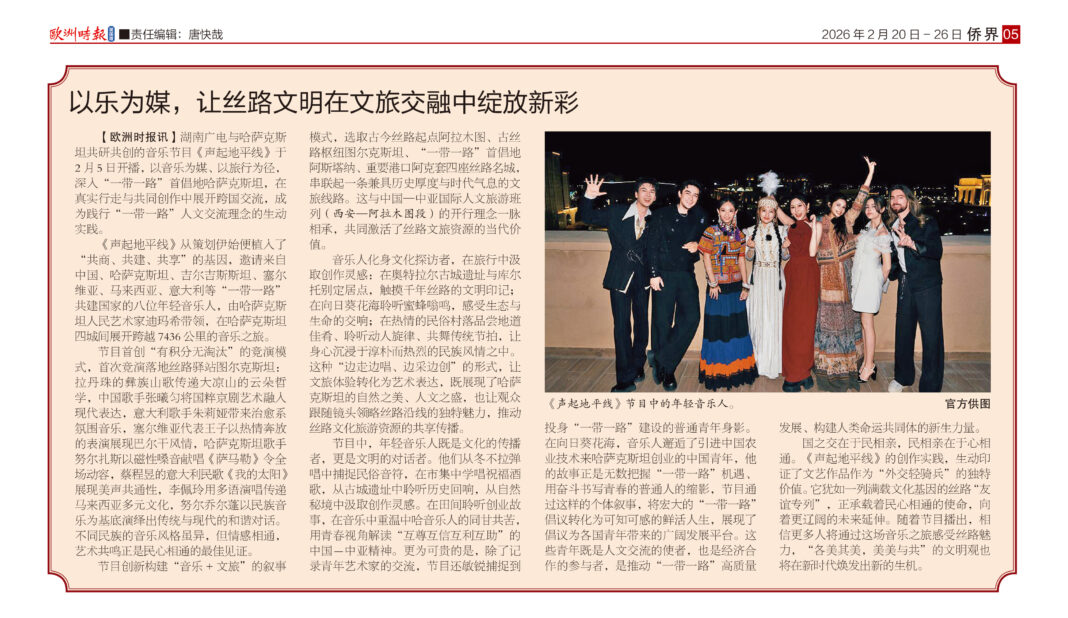


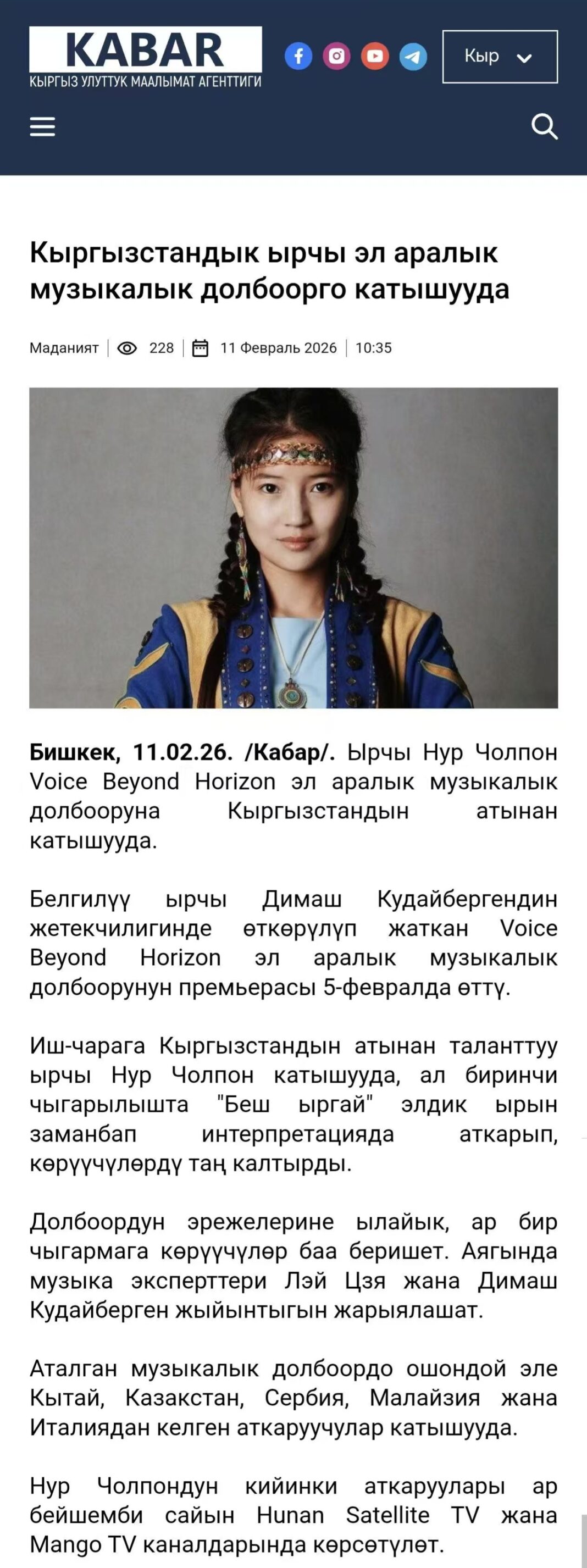
“Voice Beyond Horizon” is not only the first music entertainment program by Mango TV to be filmed entirely overseas, but also the debut of globally renowned vocalist Dimash Qudaibergen as the chief initiator of the project. As the “chosen guide,” he leads young musicians from different countries deep into his homeland, Kazakhstan. Through music, the language he knows best, he reveals the country’s most moving landscapes and stories.

Where culture and tourism converge, hearts resonate: a national symphony stretching across 7,436 kilometers. Moving beyond traditional competition formats, “Voice Beyond Horizon” pioneers a new model that combines open-air performances with immersive field exploration.
Beyond the stage, the singers visit markets, villages, and the heart of nature, engaging with local residents to gather authentic musical inspiration and real-life stories. This cultural immersion transforms the program into a vivid, multidimensional window showcasing Kazakhstan’s heritage, social landscape, and warm hospitality to the world.


The influential Chinese daily newspaper in Europe, European Times, writes about the show:
“The program innovatively constructs a narrative framework of ‘music + cultural tourism,’ selecting four iconic Silk Road cities: Almaty – the ancient yet modern starting point; Turkestan – the historic center of the Silk Road; Astana – the birthplace of the Belt and Road Initiative; and Aktau – a key port city.


This creates a cultural tourism route rich in historical depth and modern vitality. It organically aligns with the concept of the first international China-Central Asia cultural tourism train (Xi’an–Almaty section), jointly revitalizing the contemporary value of Silk Road cultural tourism resources.

The musicians become cultural explorers, drawing creative inspiration from their journeys. This approach – ‘sing while traveling, collect while creating’ – transforms cultural tourism into artistic expression. It showcases Kazakhstan’s natural beauty and rich human heritage, allowing viewers to discover the unique charm of the Silk Road through the camera lens and promoting the shared dissemination of its cultural tourism resources.”

Despite the Spring Festival holiday period, music and travel bloggers in China have also given significant attention to the project:
“I thought this was just another music entertainment show, but this episode turned out to be a cultural exploration. I was unexpectedly moved to see such authentic and heartfelt Kazakh culture presented in an entertainment format. It’s wonderful that these traditions are being seen and heard by such a wide audience.
Through sincere cinematography, the episode portrayed the traditional character of the Kazakh people and their deep cultural heritage. The panoramic presentation of a traditional village vividly demonstrated the aesthetics of everyday life and the cultural legacy of the Kazakhs.

‘Voice Beyond Horizon’ truly reflects Kazakhstan’s cultural essence – eagle hunting, cuisine, music, dance, language, and even its modern development. The translations in the program are meticulously crafted; every detail reflects dedication, accurately conveying the cultural depth and emotional resonance behind the words. I’m eagerly awaiting the next episodes.”

Authentic musical instruments and cross-cultural collaborations have also drawn the attention of music critics:
“In the first round, Kazakh singer Nurzhas combined the dombra with modern arrangements in his performance of ‘Samal,’ where the wind and light of the степpe resonated in his native-language vocals. His rendition of Sugir’s poem in the fourth round achieved a profound symbiosis between the dombra and traditional Kazakh poetic-musical form, breathing new life into a classical text through the instrument’s strings. As Master Li Yugan noted, this goes beyond a simple music competition; it represents a ‘living transmission’ of nomadic cultural heritage.

La Danzhu embodied millennia-old memories of her people, wild mountain winds, and images of migratory birds beneath a starlit sky in her original composition ‘Migration.’ Her ethereal high notes carried echoes of mountains and nostalgia for distant journeys. She specially invited a master musician to accompany her on the kobyz, intertwining her melody with the sound of the Kazakh steppe instrument.

When Nur Chorpon from Kyrgyzstan stepped onto the stage with a traditional three-string instrument, its unique timbre instantly unfolded a tapestry of the Central Asian steppe, linking Kyrgyz and Kazakh cultures.

If these ancient instruments and their stories intrigue you, be sure to watch ‘Voice Beyond Horizon.’ Close your eyes and let the strings envelop you – you’ll discover that the heart of the steppe is never truly far away.”
The concert venues set in unique tourist locations have sparked great interest among international viewers, inspiring many to explore them personally:
“The concert location was absolutely breathtaking! After the episode aired, I asked my friend from Kazakhstan where it was filmed. She sent me a photo of the Altyn Samruk monument, which has brought this Central Asian city into the spotlight.
The contestants were divided by language families: Indo-European languages such as English and Italian formed one group, while Sino-Tibetan languages such as Mandarin stood separately. Naturally, the Altaic languages Kazakh and Kyrgyz were paired together. Multilingual participants bridged these groups, reviving the spirit and form of the ancient Silk Road.”



The fourth episode opened with a concert on the shores of the Caspian Sea. Emotional viewers wrote on social media:
“After watching the trailer for episode four of ‘Voice Beyond Horizon,’ I suddenly realized: I absolutely have to visit Kazakhstan!
This time, the singers traveled to Aktau on the coast of the Caspian Sea. The moment the floating stage appeared in the trailer, I was frozen in awe. Eight singers performed passionately at the meeting point of sea and sky, against an endless expanse of living blue, a sky so vast it seemed to merge with the heavens.
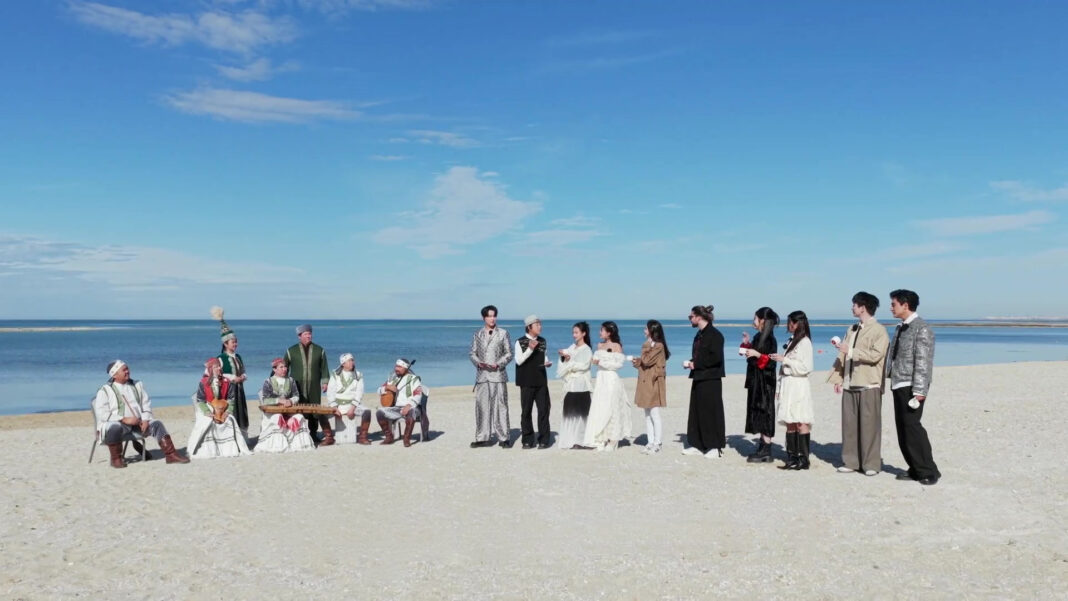
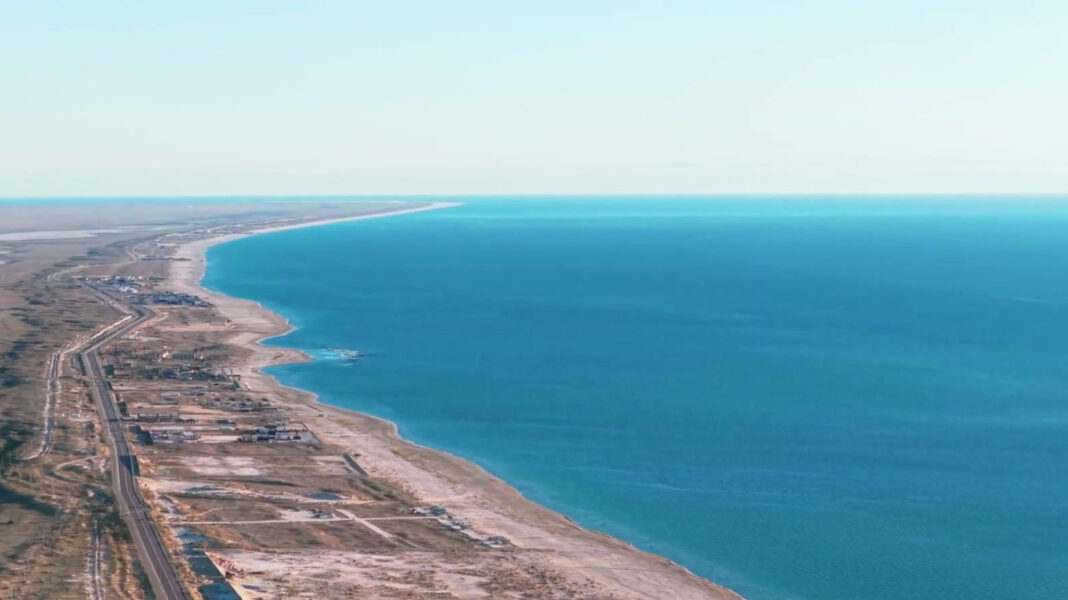

I used to think of Kazakhstan as a landlocked Central Asian country. In this episode, I discovered Aktau, the pearl of the Caspian coast. Beyond its extensive shoreline, it boasts the unique spectacle of desert meeting sea – a landscape where boundlessness and softness coexist. The singers’ voices felt astonishingly suited to this setting.

I always believed music shows were just about listening to songs and watching studio performances. The magic of ‘Voice Beyond Horizon’s’ open-air competitions lies in their unpredictability! The sea breeze, the waves, even the clouds on the horizon become part of the stage. That atmosphere is impossible to recreate in a studio. I never imagined they could create something like this!”
