
 ҚАЗ
ҚАЗ  RUS
RUS  ENG
ENG 
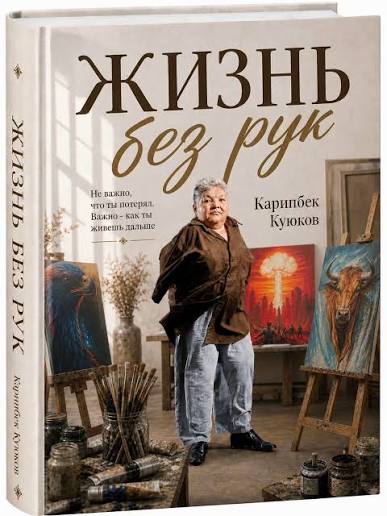
Kazakhstan has launched “Reading Nation,” a nationwide campaign to encourage reading. On September 21, Dimash Qudaibergen announced on Instagram that he was joining the campaign and shared one of the books he had read: “Life Without Arms” by Kazakh artist and anti-nuclear activist Karipbek Kuyukov.
DimashNews spoke with the author about the story behind the book, his journey as an artist and his meeting with Dimash in Karaganda.
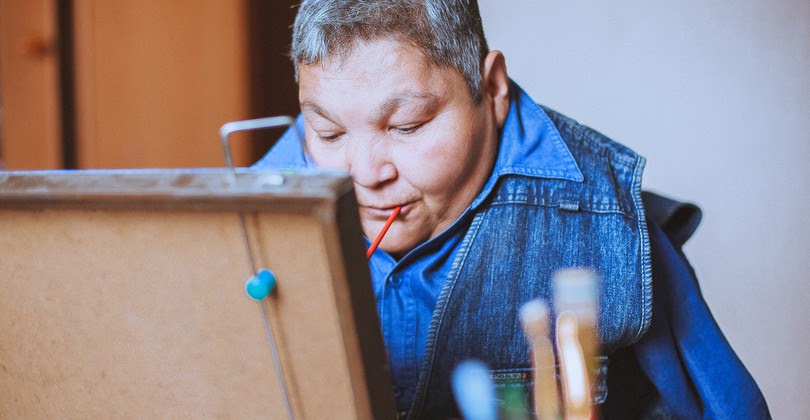
Mr. Kuyukov, how did the idea for “Life Without Arms” come about, and what would you like readers to take away from it?
The idea came to me about 30 years ago. I was leading a busy life, with exhibitions and travel. I had gathered so many experiences and emotions that I wondered whether I could ever put them all into a book. Then I came across a team online, the Soz literary bureau, who said they could help me write it.
I recorded voice messages, and they transcribed them. The book includes many moments that have stayed with me, the kind you never forget. I was surrounded by so many good people, and the bad memories faded. If someone who feels they have reached a dead end reads my book and finds a way forward, I will be happy. You need to leave something behind, something meaningful for people to remember you by. My paintings are my children, and the book holds what is in my heart.
When you met Dimash Qudaibergen in Karaganda, you gave him a painting and your book. How did that meeting come about, and what made it memorable?
It was a wonderful stroke of luck. I had long dreamed of meeting him and going to one of his concerts. I am a fan. He has a God-given gift. When I heard he was coming to Karaganda for Miners’ Day, I was delighted, but I was due to fly to New York on August 29 for a conference at the United Nations.
So I asked the organizers to find out where Dimash was staying so I could give him one of my paintings. I am always happy to give my work to people like him. Hollywood actor Jean-Claude Van Damme, Ban Ki-moon and Barack Obama, for example, all have paintings of mine, and my work is also held in museums abroad.
I wanted Dimash, who brings people happiness through his voice, to see my work. I chose “Snow Leopard” for him, with the wish that he would always keep reaching new heights. I also asked him to pass my book on to his parents as a gesture of thanks for raising such a fine son.
The meeting took Dimash by surprise: I caught him just as he was stepping out of the elevator. In return, he took off his glasses and put them on me. Can you imagine? I gave him a little piece of my heart…
When did you first realize you wanted to become an artist? Where did your journey in art begin?
I started school in Leningrad and gradually began learning to hold pens and pencils with my feet. In fourth grade, when we were studying Alexander Pushkin, we were asked to draw one of his characters. I drew the cat from “Lukomorye.” My teacher was struck by my drawing and began giving me art lessons.
From those first drawings at school, you went on to create works about the consequences of nuclear testing. How did the Nevada–Semipalatinsk movement help you bring this subject to the world’s attention?
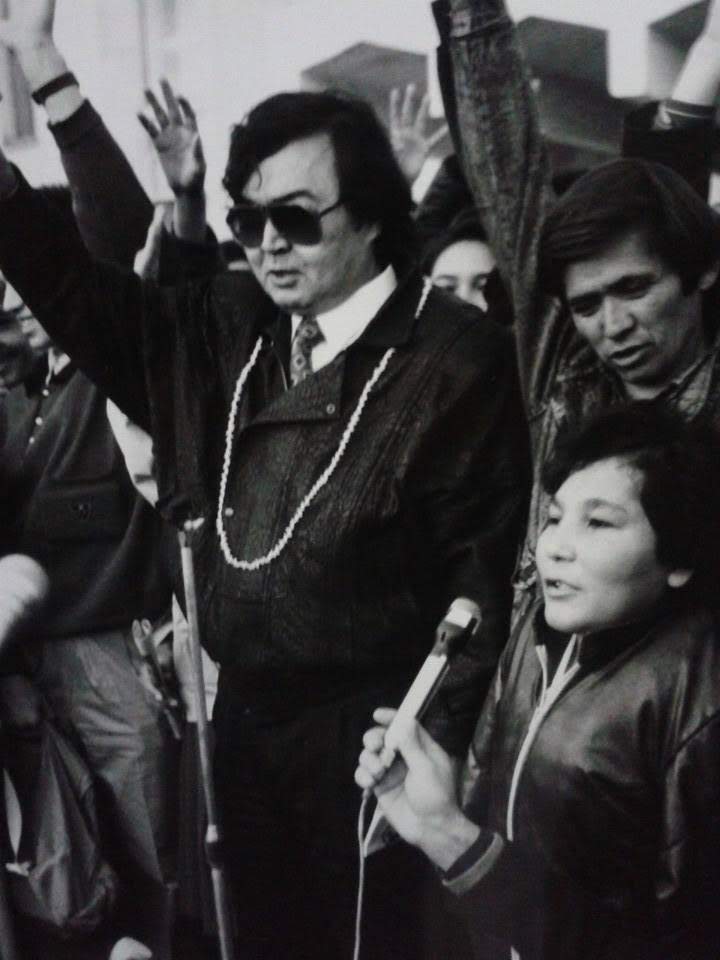
Through the Nevada–Semipalatinsk anti-nuclear movement, led by the poet Olzhas Suleimenov, I was able to exhibit abroad: in the United States, Germany, France, Turkey, Switzerland and Russia. I wanted to express my feelings about pressing issues that mattered, so that people looking at the paintings could reflect on them and draw their own conclusions.
Was there a painting you found particularly difficult to create emotionally? Why?
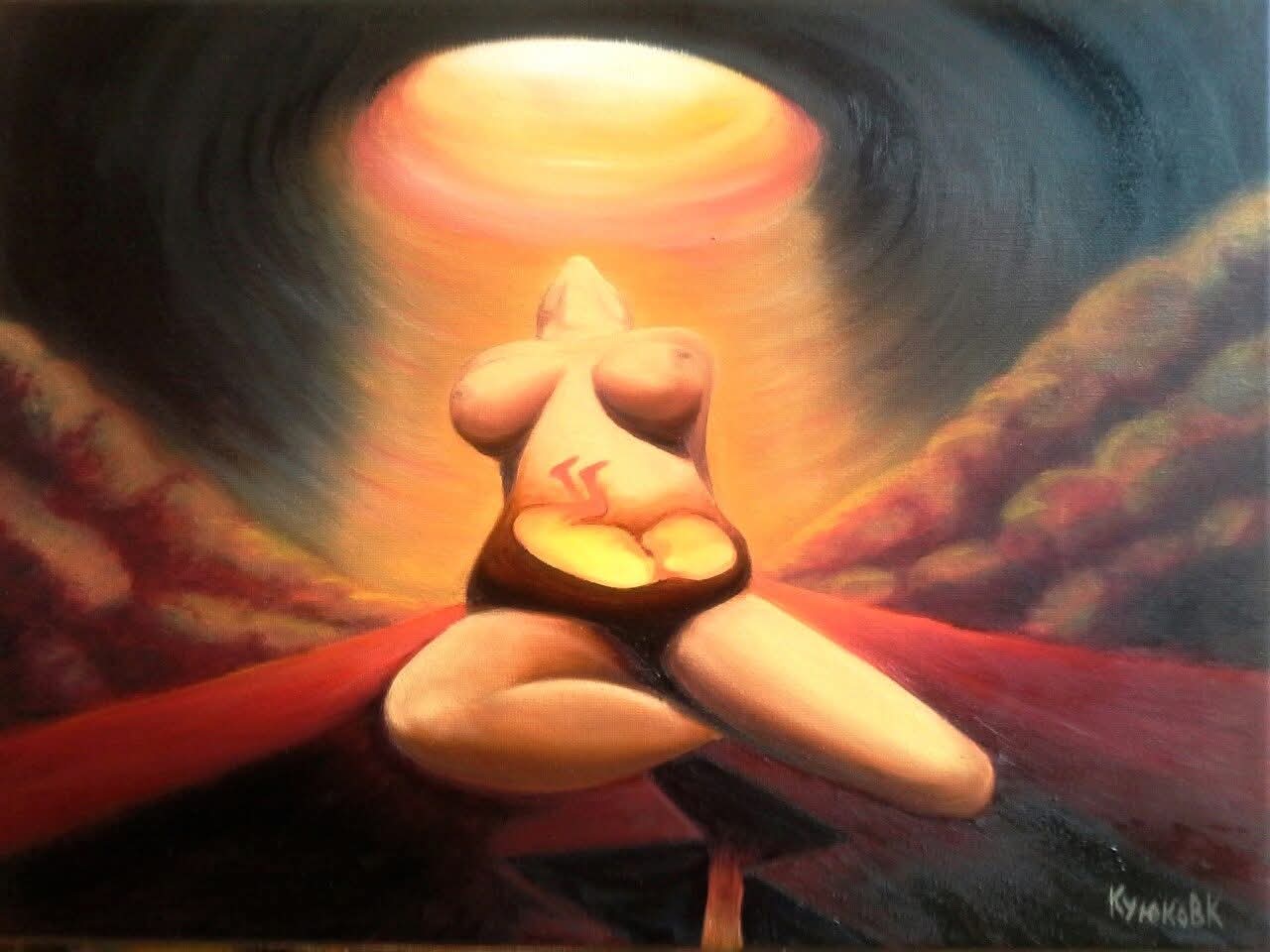
I do not paint portraits, especially of my family. I could not bring myself to paint my mother’s portrait either, but I wanted to convey her suffering. She witnessed the nuclear tests, struggled with illness all her life and lost two children. Then I was born without arms…
That was how “A Mother’s Suffering” came about. It depicts a woman in anguish, with a baby without arms, like me, in her womb. Nuclear tests are taking place around her, the ground is giving way beneath her feet, and above her there is a path to the Almighty. That was the hardest painting I have ever done.
You have met audiences in many countries. Which encounters and responses to your work have stayed with you?
Over the years, I have met many people, including women and mothers living near the Semipalatinsk and Nevada nuclear test sites. I feel their support and gratitude. I could simply live on my disability pension, but I cannot remain indifferent. I try to speak about these issues through my paintings.
In 1992, I spoke to schoolchildren in Colorado. When they went home, they told their families about the tragedy in Kazakhstan and collected medicines, chocolate bars and stickers. They brought me two boxes and asked me to take them to children in Kazakhstan as a gesture of support.
Alongside tragic subjects, you also paint landscapes. What does depicting Kazakhstan’s natural beauty mean to you?
I have visited many countries and seen beautiful landscapes, including the white birches of Russia. When I paint Kazakhstan, I want to convey the beauty and grandeur of our mountains and the vastness of our steppes, just as the Almighty created them, untouched by human hands.
Once, a mountaineer named Indira, who was born in Semipalatinsk and lives in London, carried one of my paintings to a mountain summit. Despite all the difficulties, she displayed my work there and, through it, represented Kazakhstan too.
What other subjects matter to you as an artist? How have your charity exhibitions helped children?
I paint landscapes and animals, hoping to draw attention to environmental issues. It pains me to see children being cruel to animals. If a child throws a kitten from the tenth floor, something is wrong…
I have also held charity exhibitions to help children facing the same challenges I faced growing up. I tried to help in any way I could: arranging medical care, putting together gifts of sweets and paying for trips.
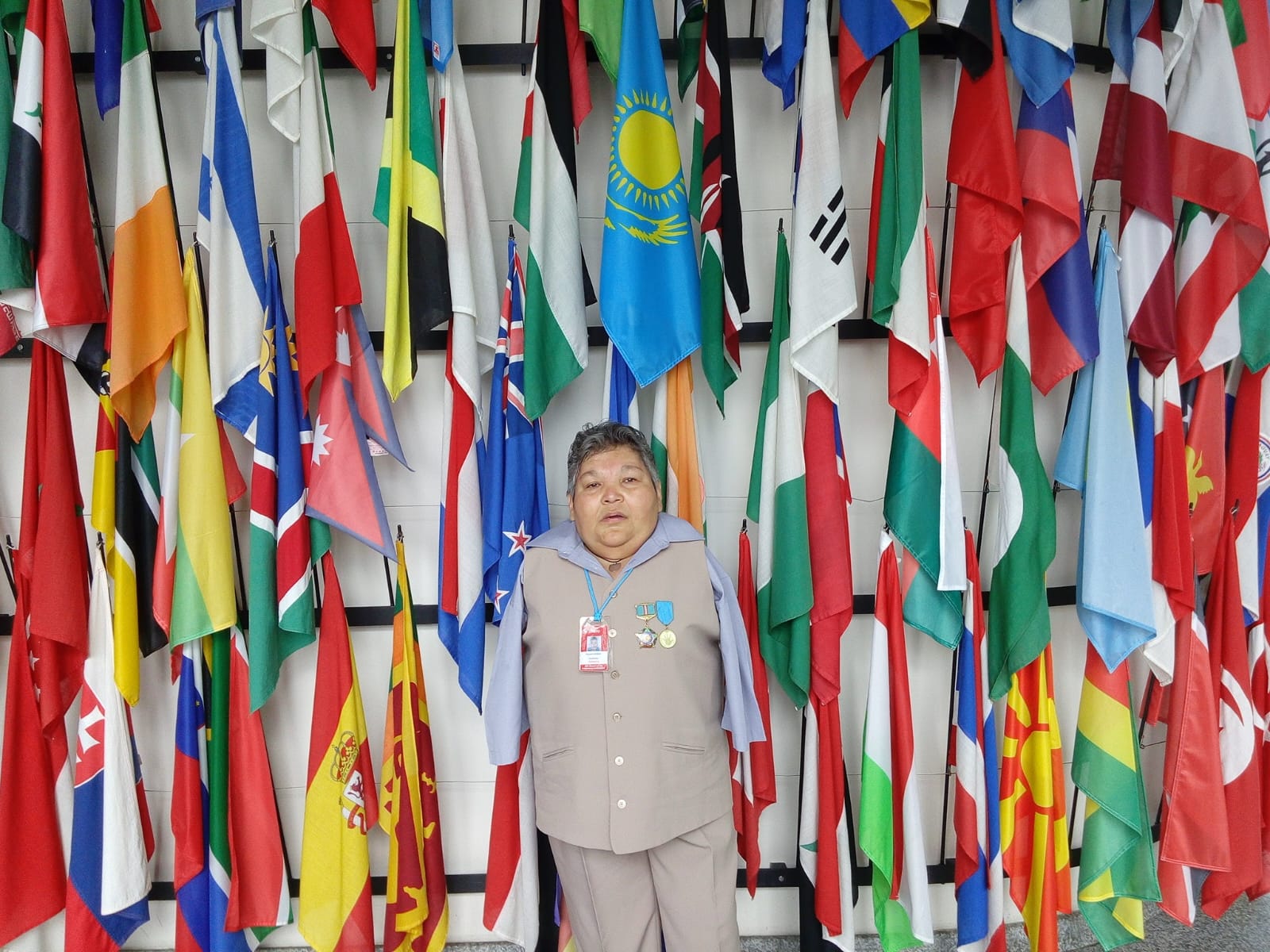
People often describe you as someone with great inner strength. How do you feel about that description? What keeps you moving forward?
I would not call myself strong. I believe the Almighty sustains me. In my early years, I lived in Russia and attended a boarding school with children like me. I did not visit Kazakhstan during that time. I think anyone adapts to their circumstances. Not having arms did not mean I was going to spend my days lying down. I wanted to do everything myself: I skied and skated, and learned to swim and ride a bicycle. The only thing I never learned was how to drive a car.
Now, at 58, I do not want to be a burden to others. I try to help my family and those close to me. I have many nieces and nephews. Being able to help someone brings me joy. If a conversation with me makes someone smile or see something differently, that is already something worthwhile.
What would you say to a young person who wants to pursue art but is afraid they will not succeed?
I often meet schoolchildren and students at art schools. I would share the words of my own teacher: “Do not be afraid. Just keep moving forward. Whatever comes of your efforts, it is something you have achieved yourself.”
Do not be afraid of criticism or of someone laughing at you. You created it yourself; it did not come out of a printer. Even if the result is unconventional, even if the right eye in a portrait is larger than the left, it is your work. The more you practice, the better you will become. Talent is not something you are born with. It is something you develop.
