ҚАЗ
ҚАЗ  RUS
RUS  ENG
ENG 
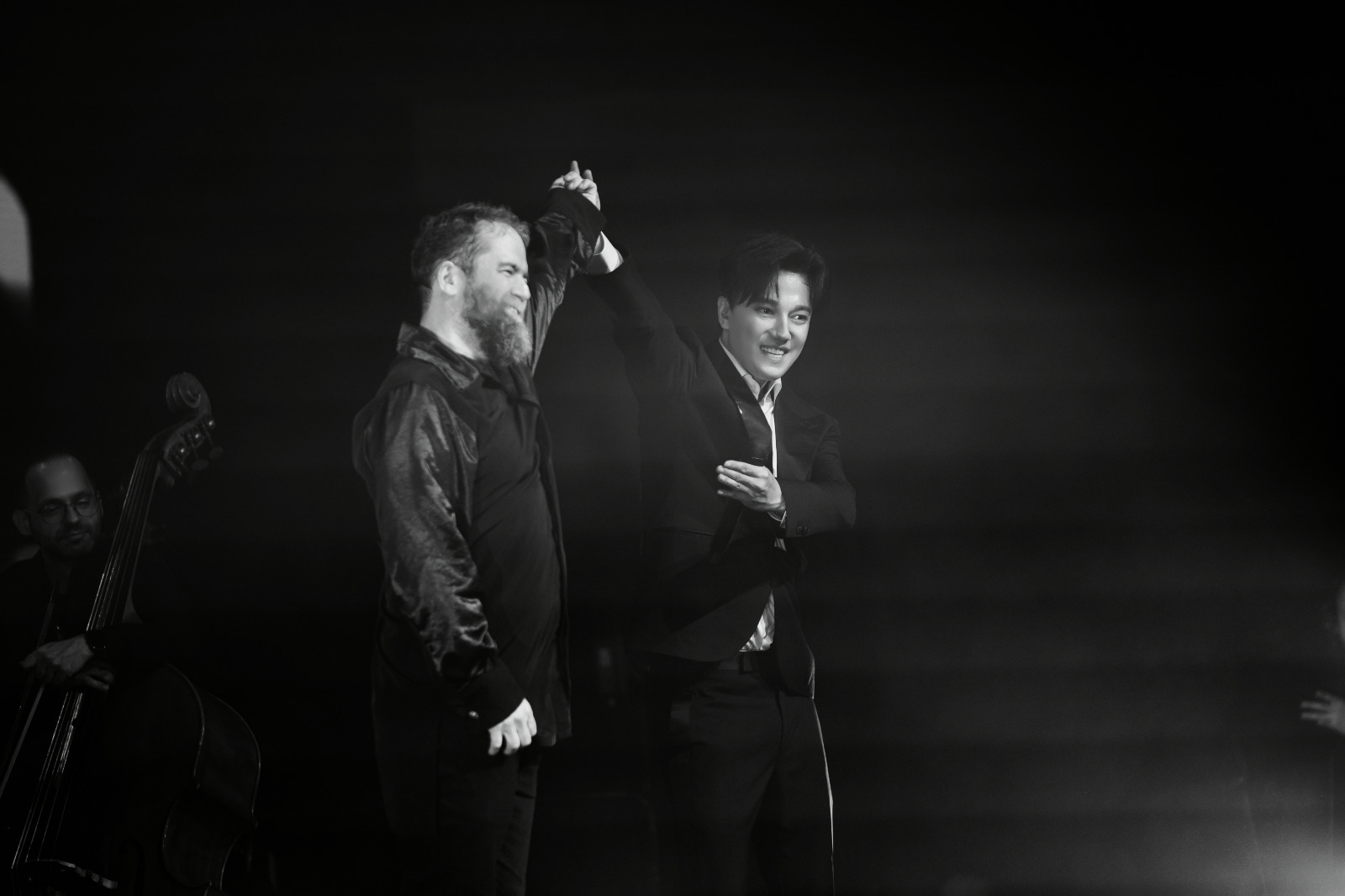
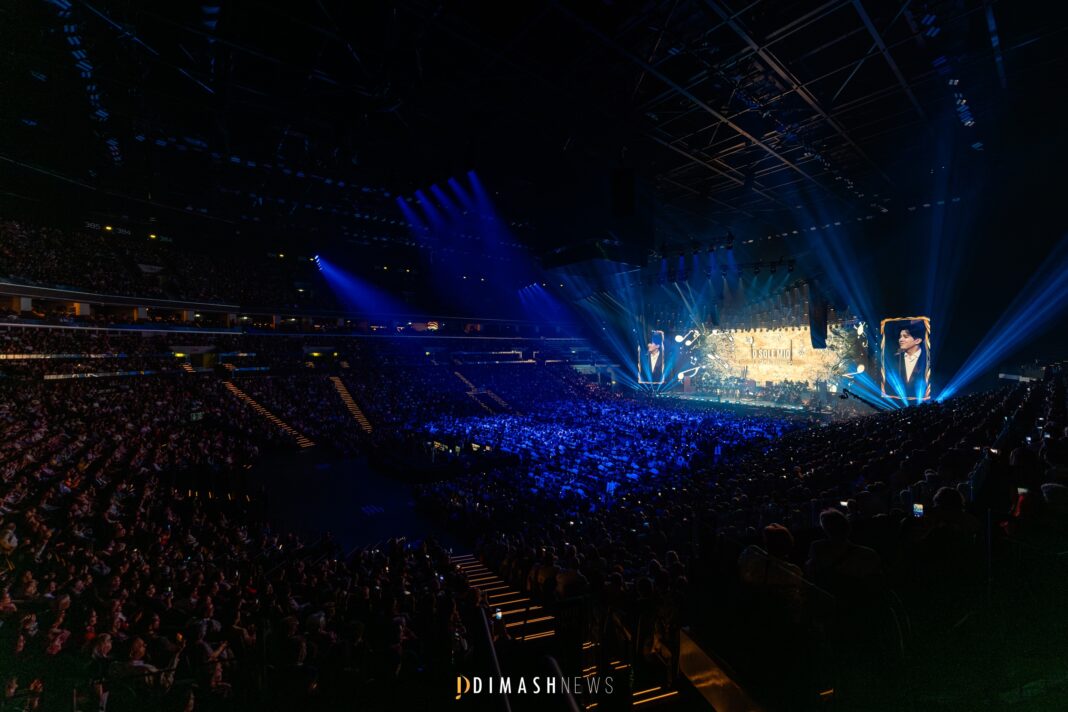
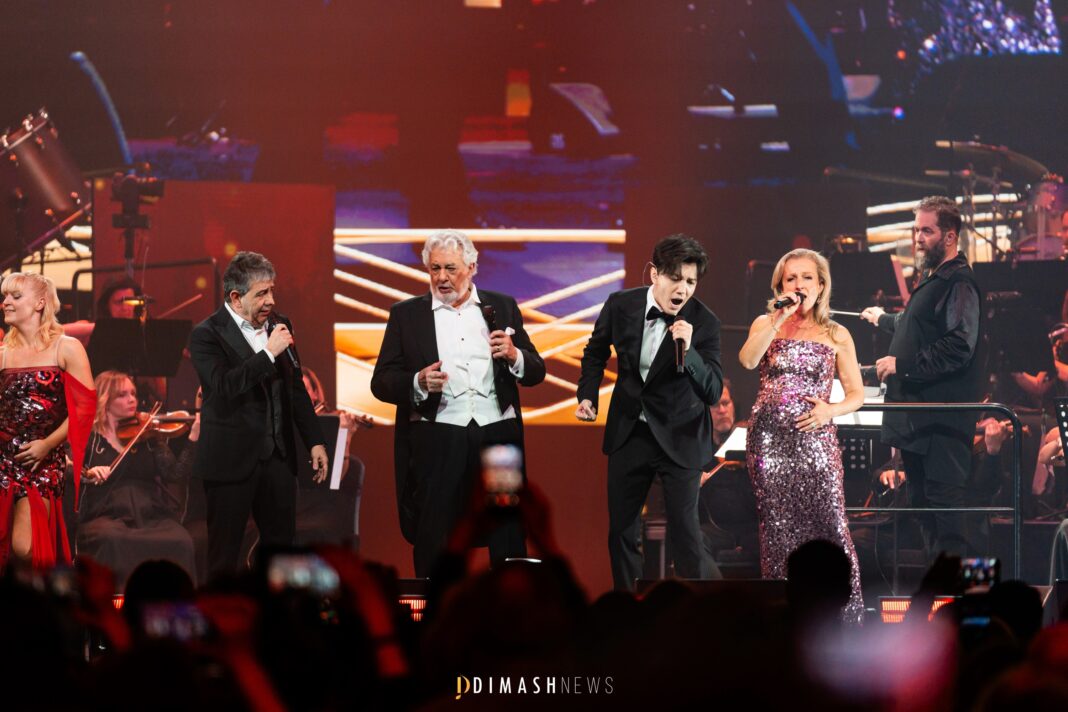
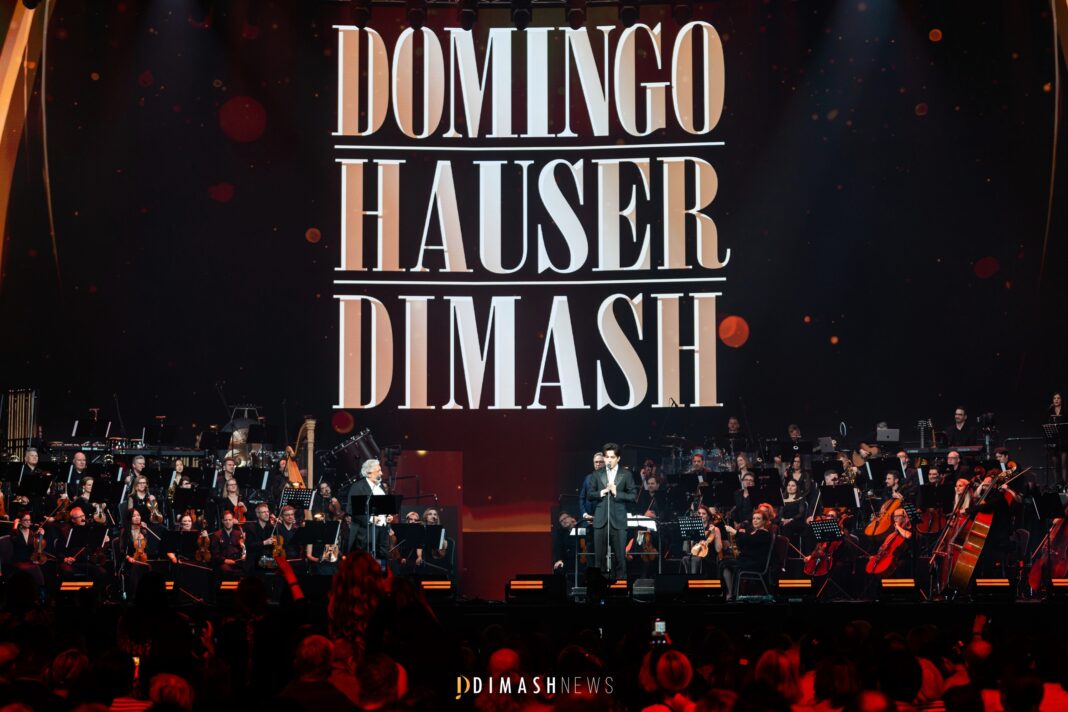
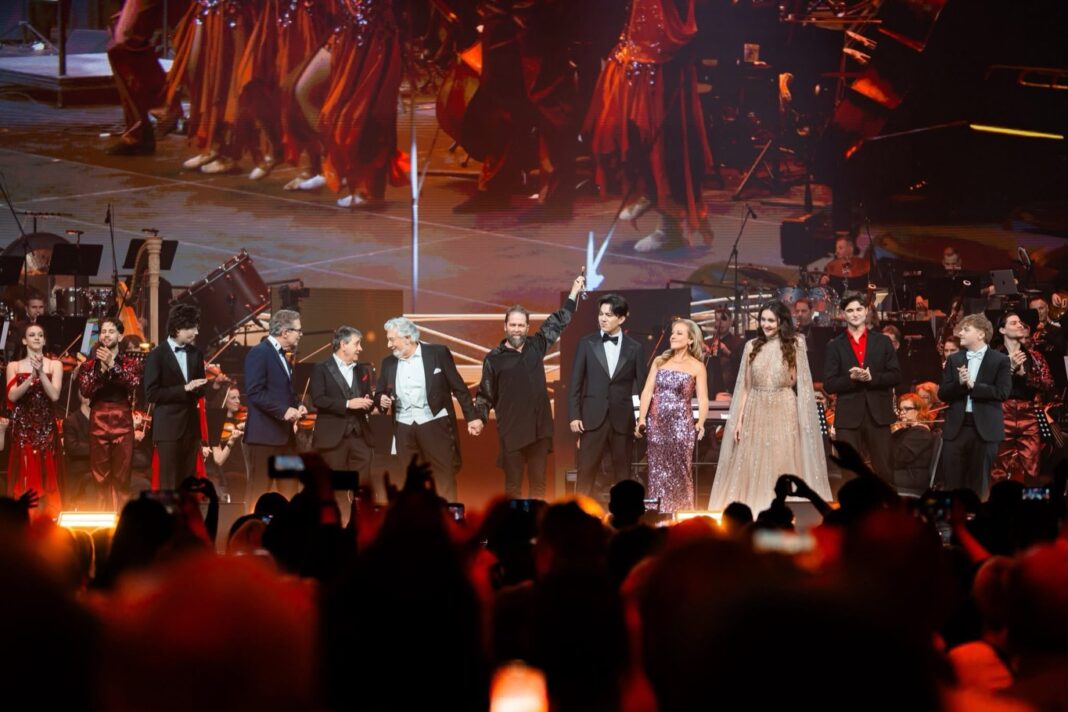
On April 18, a concert featuring three world-class artists took place: Maestro Placido Domingo, Dimash Qudaibergen, and HAUSER. Supporting them was one of Europe’s leading symphony orchestras, Hungary’s Budafok Dohnányi Orchestra, with composer, arranger, and conductor Peter Pejtsik on the podium.
He was the person who shaped the musical space in which operatic classics, contemporary vocal crossover, and instrumental virtuosity became part of a single artistic concept. DimashNews spoke with Maestro Pejtsik about the creation of the project, what happened behind the scenes, and the key moments in preparing the concert.
The Budafok Dohnányi Orchestra (BDO) is one of Hungary’s most dynamic and versatile symphonic ensembles. Founded in 1993 and supported by the municipality of Budafok-Tétény, it quickly became a significant presence on the European stage. Under the direction of Gábor Hollerung, the orchestra built a reputation as an ensemble equally at home in classical repertoire, contemporary music, and large-scale crossover projects.
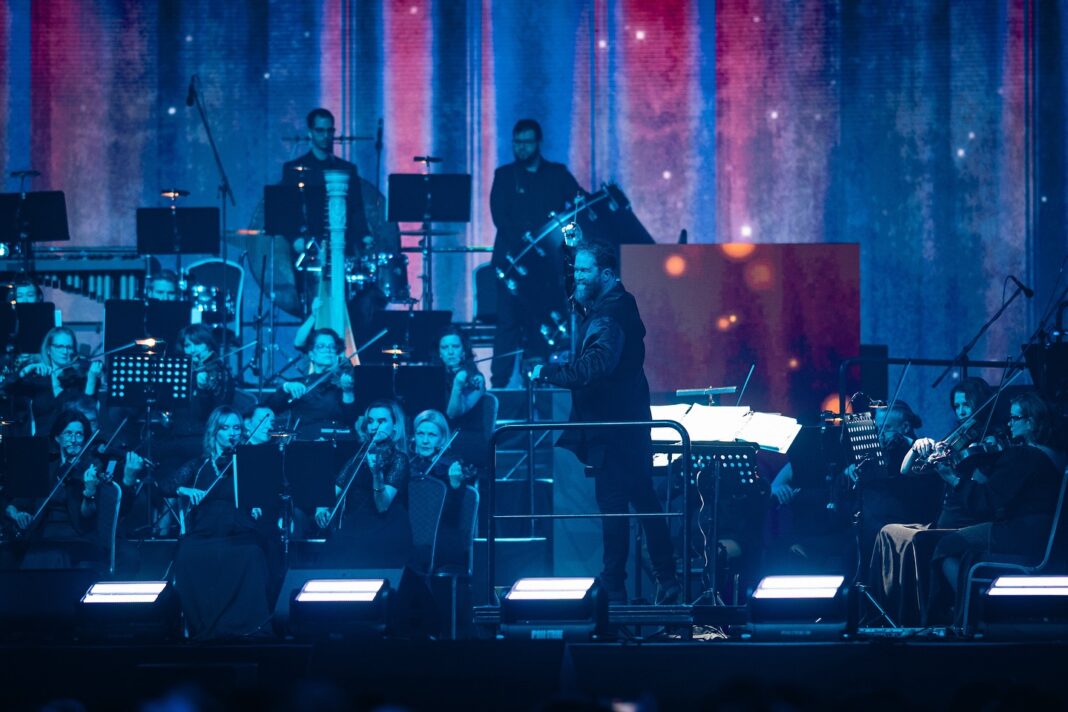
BDO has performed with artists such as José Carreras, Andrea Bocelli, Sting, and many others. It is also a regular participant in concert series at the Liszt Academy of Music and Müpa Budapest, where the Music+ project transforms concerts into formats that combine music with other art forms.
Within this framework, the role of conductor and composer Peter Pejtsik is especially important — a musician who moves freely between academic music, rock, film music, and crossover, and who does not see genres as limitations.
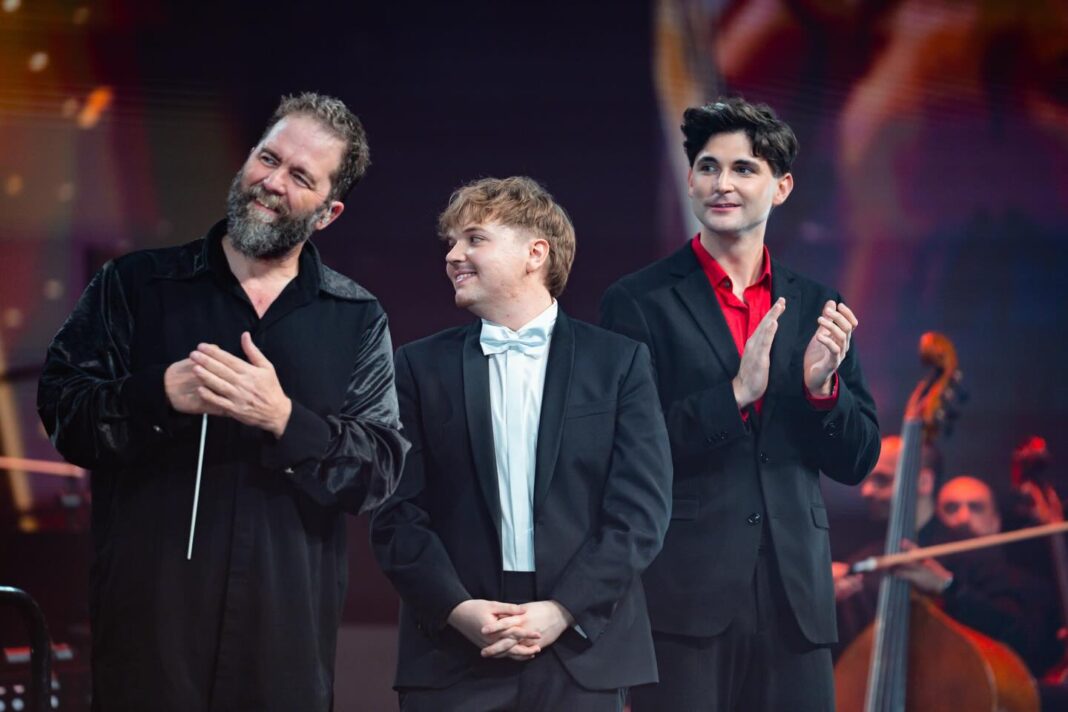
When asked how such different musical worlds can be united in a single concert, he answers almost philosophically:
“Having another language means having a second soul,” said Charlemagne. “The limits of my language mean the limits of my world,” said Wittgenstein. The same is true for musical languages. When you have something to say, you choose the language that best fits the meaning and the situation.
He emphasizes that Budapest and the orchestra itself naturally exist in an intersection of styles:
“Budapest, in addition to being a vibrant center of classical and contemporary music, also plays an important role in the film music industry. Here, with our musicians, we have recorded many international soundtracks. And film music covers an incredibly wide range of styles, so we have had the opportunity to work in almost every possible genre.”
According to him, this experience makes genre flexibility a natural part of the work rather than a forced compromise:
“I myself compose and perform in different styles: from contemporary classical music to prog rock, operetta, and musicals. So we already had this entire toolkit at our disposal, and the different styles in the concert were not a problem – on the contrary, they became a huge creative space where we could truly enjoy the process.”
However, even with such experience, working with artists of the caliber of Domingo, Dimash, and HAUSER remains, in his words, extremely challenging at the preparation stage:
“Producing a show with soloists of this level is always difficult. The preparation phase usually becomes a real challenge, especially if you want to create something new and unique rather than just another standard performance. All of them are very busy with other concerts, each has a large team, their own communication style, and their own schedules. Sometimes it is difficult to find a common denominator, coordinate calendars, make decisions, or communicate changes.”
At the same time, he notes that personal interaction with the artists turned out to be unexpectedly different from these difficulties:
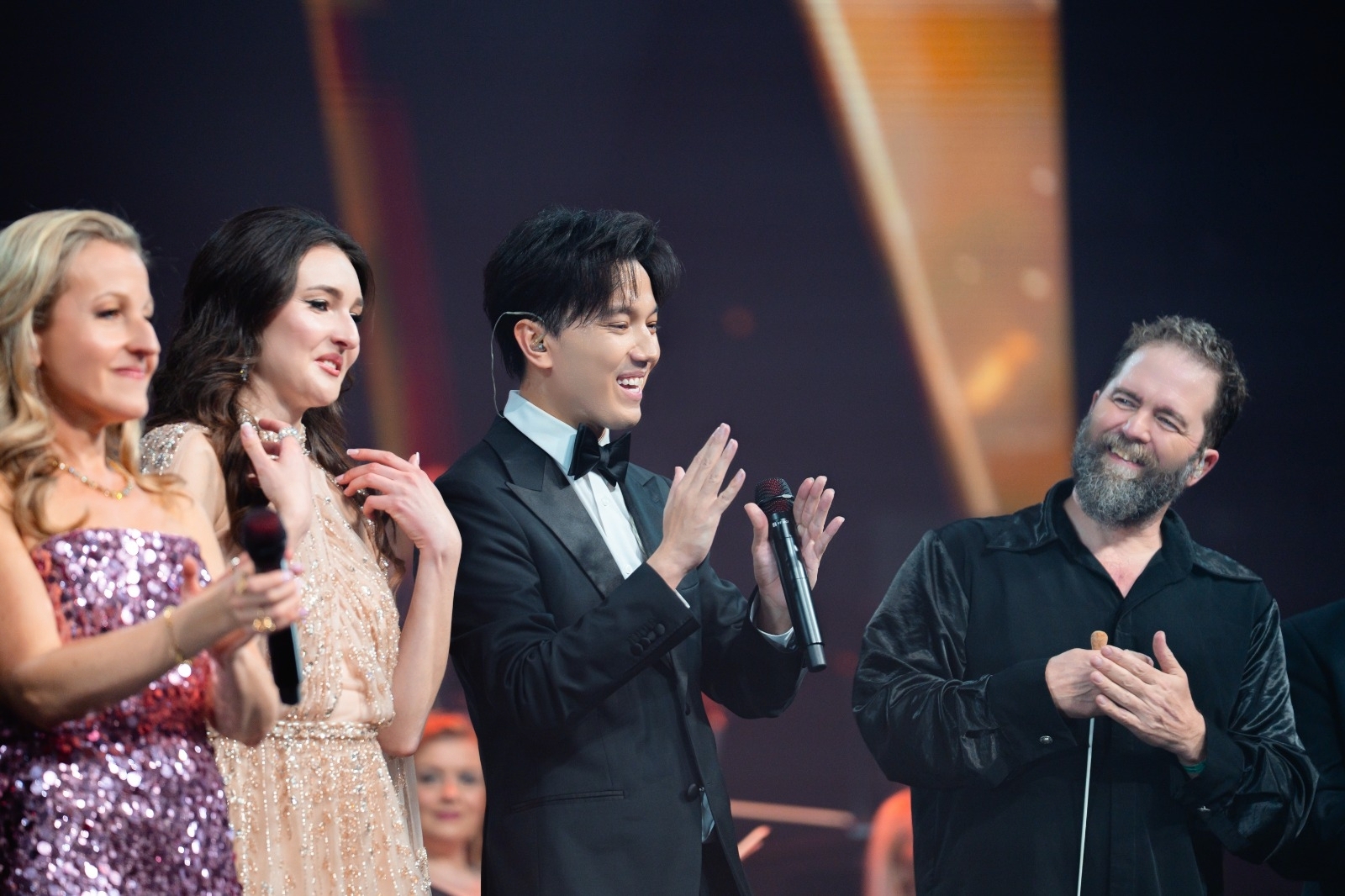
“Based on this, one might think that working with them personally would also be difficult. But you would be surprised by their sincerity, humility, and humanity. For example, during rehearsal breaks we happily improvised with Dimash and Mansur; Maestro Domingo always made sure we did not overwork the orchestra, and so on.”
For him, a particularly important aspect was the mutual trust between all participants:
“As a conductor, I am especially pleased that all the soloists stepped towards us and said they felt confident and comfortable on stage.”
The energy of the concert itself, according to Pejtsik, began even before the first note:
“To be honest, I was genuinely surprised by the reaction of our wonderful audience the moment I stepped onto the stage. I could not believe my ears: the applause was something you sometimes only hear at the end of a concert. So I even decided to check it with the audience by showing my surprise: ‘Is this real? Or am I dreaming?’ – and they (that is, you!) responded even louder. That moment set the tone for the entire evening, and from there the energy only kept growing.”
The preparation process, he admits, was extremely intense, and the most difficult moment was HAUSER’s forced absence due to health reasons:
“The preparation was truly long and exhausting: we had to solve many problems, achieve different goals, and meet a wide range of demands and needs. There were many difficult moments, but the hardest of all was definitely HAUSER’s unexpected absence.
We had to solve this in a way that would require as few changes as possible to the already printed program. This meant urgently creating new arrangements, finding guest soloists, organizing additional rehearsals, managing communication, and many other issues.”
Among the musical challenges, he highlights two works in particular.
“From a preparation standpoint, the most difficult task was the last-minute reworking of Game of Thrones.
In terms of performance, the most challenging piece was Adoro — a touching duet between father and son (Plácido Domingo and Plácido Domingo Jr.). When I began the piece, the atmosphere between them on stage was so warm that they were not yet ready to enter. I immediately felt this, so I brought the orchestra back to the beginning after a few bars. Fortunately, we managed to do this without stopping or restarting the piece. I hope the audience did not even notice.”
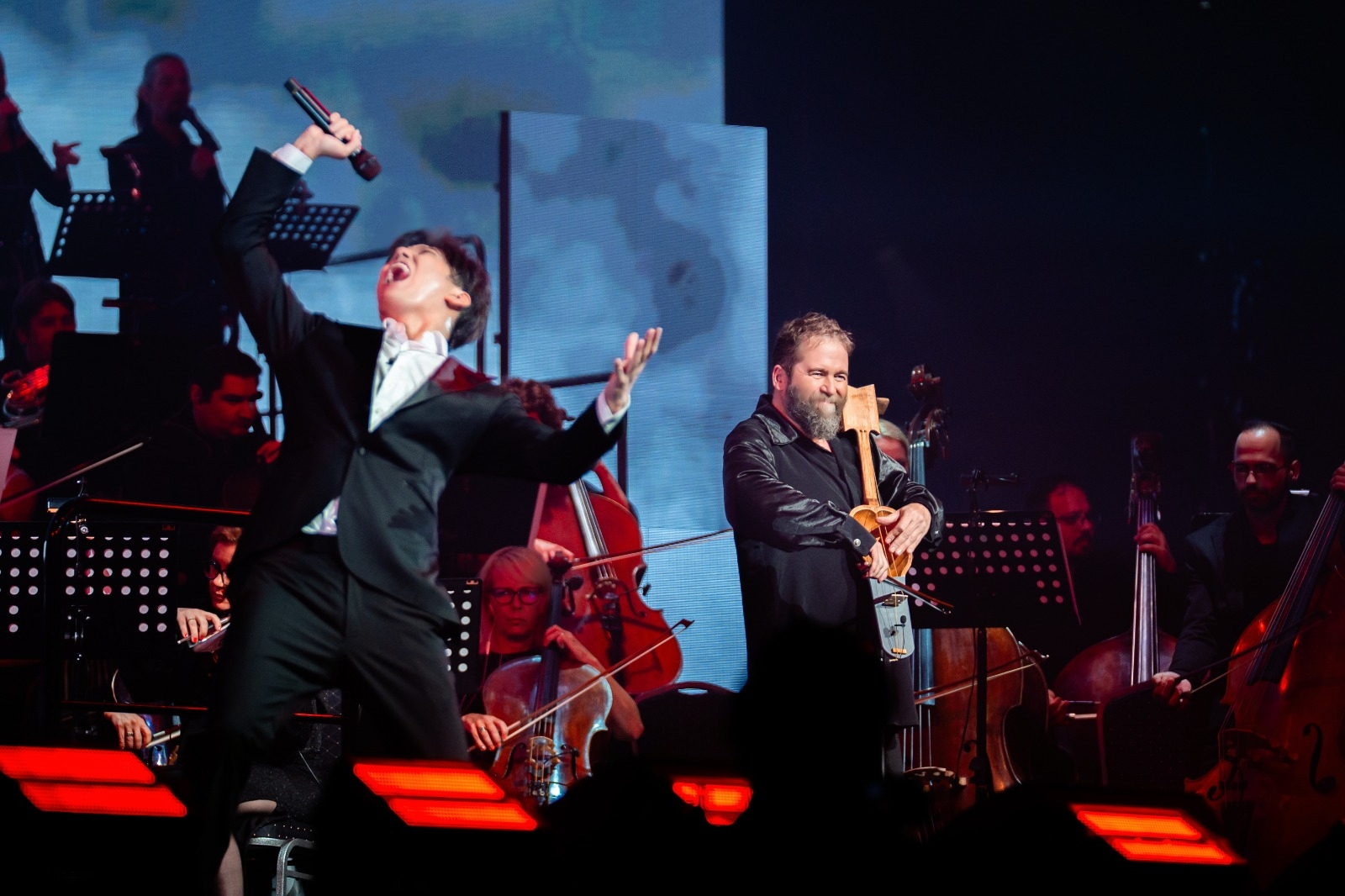
Another important and unexpected element of the program was the inclusion of Durdaraz – a piece that originally did not exist in a symphonic arrangement.
“Although we all love Dimash’s large-scale, broad, slow and mid-tempo symphonic songs, I felt that for a truly rich and multifaceted concert experience we also needed a fast piece with a different energy. That is why I chose Durdaraz, even though it did not previously have a symphonic arrangement.
So I created the missing orchestral version. I even added the string section to Mansur’s virtuosic dombra part. I am very happy that everything turned out so well.”